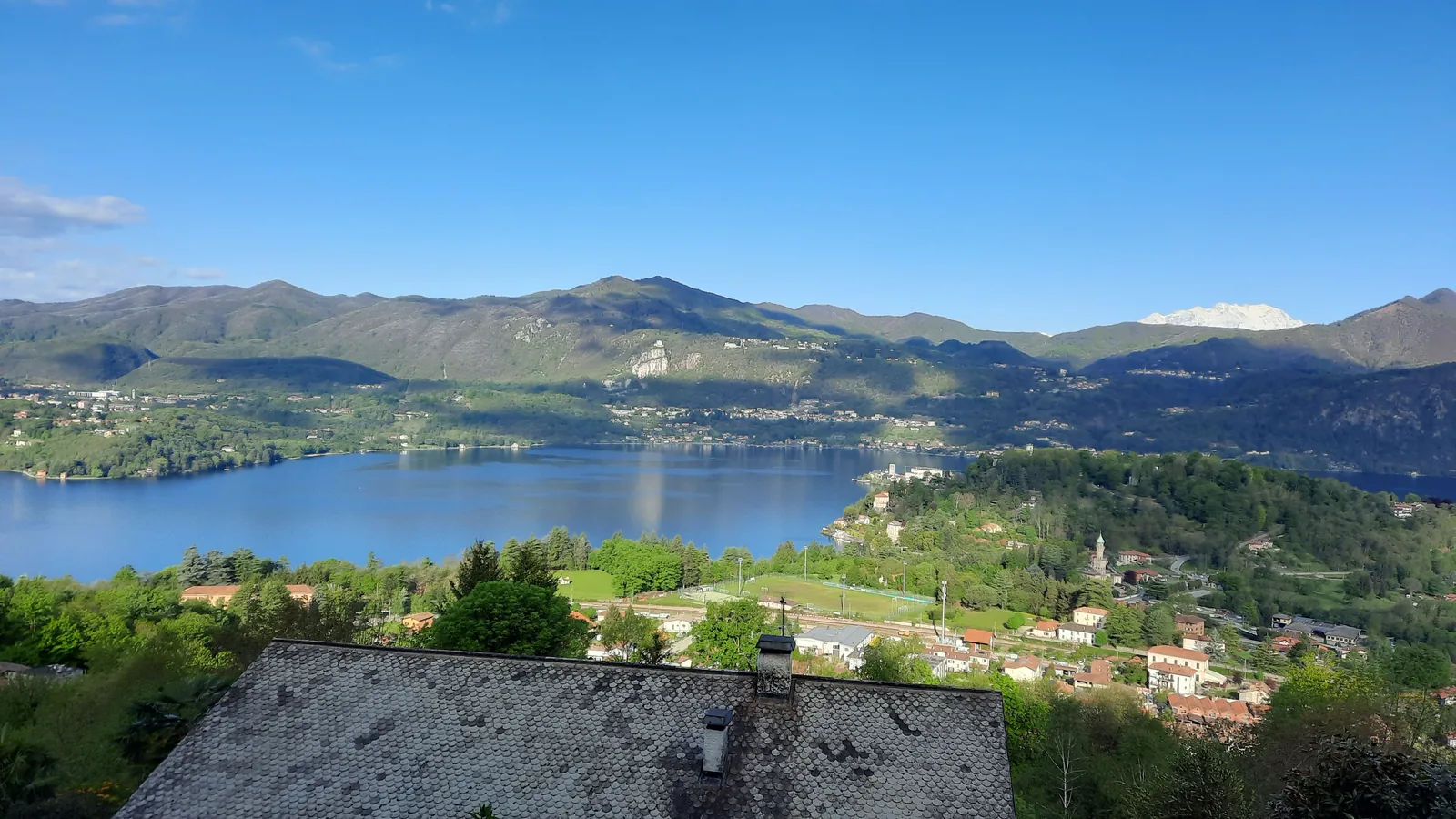
Lake Orta from the Santuario della Madonna della Bocciola – the starting area of my walk · The Teacher71 · Wikimedia Commons ↗ · CC BY-SA 4.0 ↗ · Cropped in cards; converted to WebP Image: Lake Orta from the Santuario della Madonna della Bocciola – the starting area of my walk.
In 2026 I walked the Grande Traversata delle Alpi with a group from Lake Orta to the Aosta Valley, on the Italian side of the Alps.
Quiet, powerful nature
For me, the GTA is about valleys, old connections between villages and a landscape whose strength needs no grand display. Forest, pastures and rocky paths alternate.
Walser houses and mountain culture
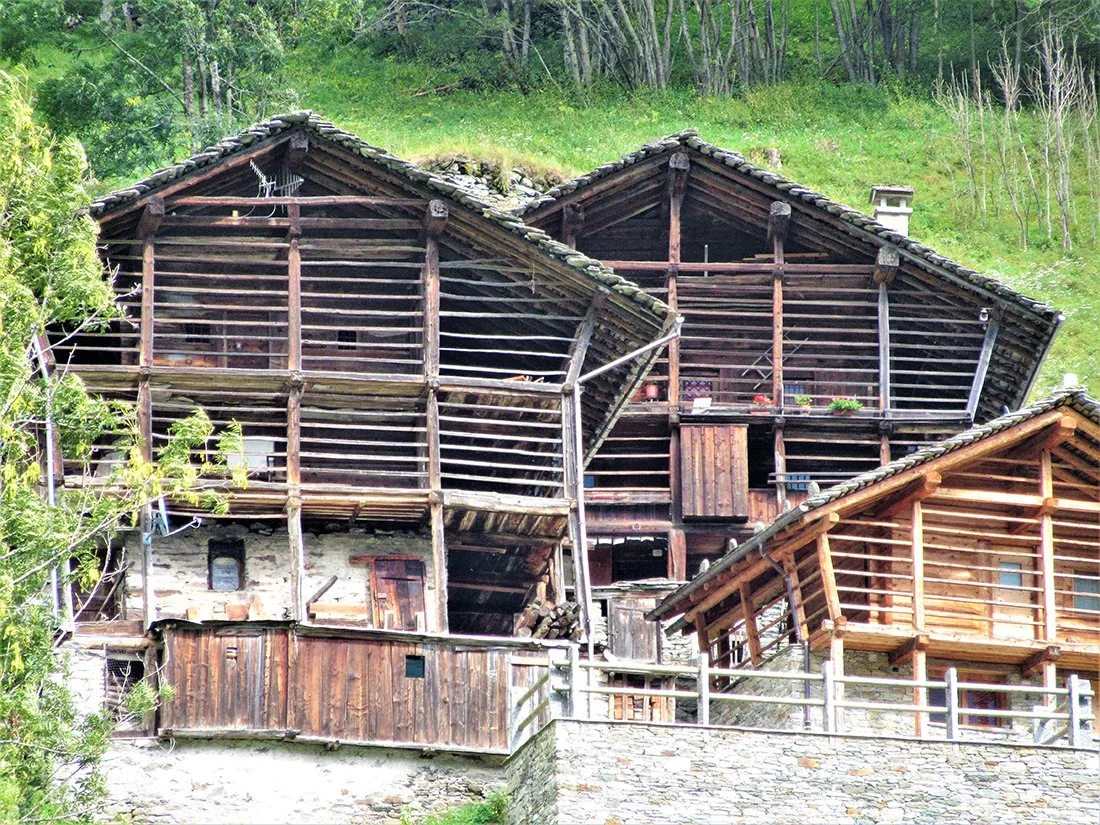
Walser houses reflect settlement in the high valleys and a building tradition adapted to steep slopes and long winters. In Alagna, a stone base supports a timber structure built from horizontally stacked logs.
Outside, covered wooden galleries and poles provided a sheltered, airy place to dry hay and grain. Inside, the stable, living spaces and stores shared one roof. Sleeping rooms were located above the stable; some houses also had a living room beside it. Hay and food were stored on the upper floor. This compact arrangement and the proximity of the animals helped people cope with cold winters.
The Walser Museum in Alagna, housed in a preserved building dating from 1628, illustrates this way of life. Layouts vary between regions; there is no single design shared by every Walser house.
The great peaks from the south
My memories include views of Monte Rosa, the Matterhorn and Mont Blanc. The Italian side gives a different perspective on the Alpine arc and the four-thousand-metre peaks along the Swiss border. Views depend on location, route and weather; these peaks are not visible from every GTA stage.